
Central heating · Edinburgh & the Lothians
Central heating repairsin Edinburgh that getevery room warm again
Cold radiators, noisy pumps, failing valves and rooms that never catch up, diagnosed at system level and put right by a Gas Safe registered engineer, with the price agreed first and 12 months of workmanship cover after.
20+ years experience · Worcester Bosch & Vaillant accredited · Gas Safe registered
Gas Safe
Registered for all gas heating work
20+ yrs
Diagnosing and repairing heating systems
12 months
Guarantee on our workmanship
£2m
Public liability insurance
Domestic
Houses and flats only, never queued behind contracts
The service
Heating that worksin every room
What it covers
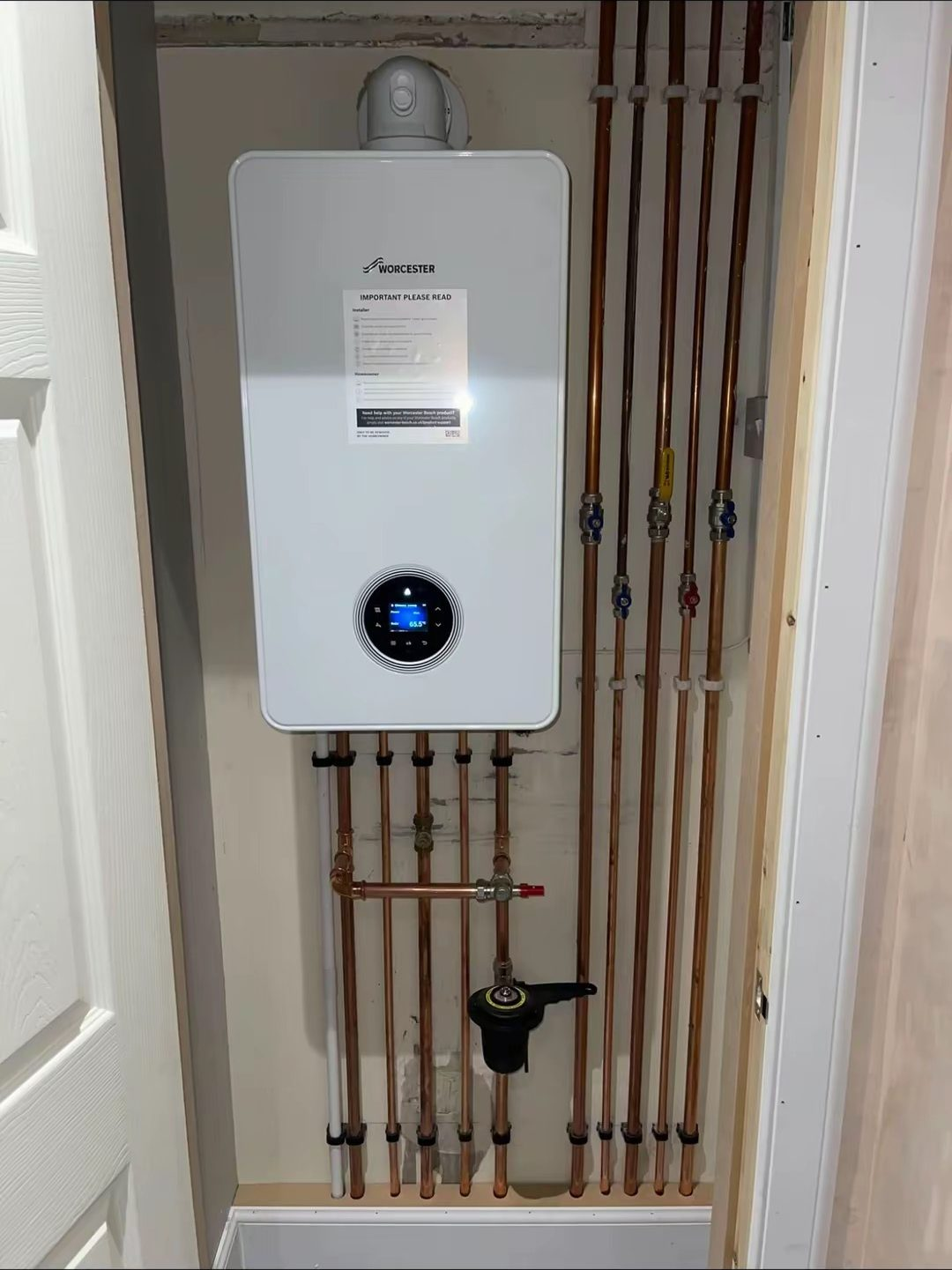
Central heating work covers everything past the boiler: radiators and towel rails, thermostatic and lockshield valves, circulating pumps, three-port and two-port motorised valves, room thermostats and programmers, cylinder stats, expansion vessels, filling loops, magnetic filters, pipework and system balancing. We repair faults, replace failed components, add or move radiators, and correct systems that were never commissioned properly in the first place.
Who it's for
For anyone in an Edinburgh home who is heating rooms they cannot feel. Typical callers have one radiator cold at the top, one cold at the bottom, an upstairs that roasts while the living room stays cool, a pump that hums through the night, or a thermostat that no longer controls anything. Landlords use us to get a system reliable between tenancies rather than fixing the same fault every winter.
When you need it
The best time is early autumn, before the first genuinely cold week, because that is when a marginal pump or a sticking valve turns into no heat at all. Do not wait if you have cold spots, gurgling or banging pipes, radiators needing frequent bleeding, pressure that keeps dropping, or a boiler that fires and then cuts out quickly.
Why it needs doing properly
Most heating complaints are system problems wearing a boiler costume. Replacing a boiler on a system full of magnetite, with a seized three-port valve and radiators that have never been balanced, simply installs an expensive appliance into the same fault. Professional diagnosis looks at flow and return temperatures, pump speed, valve operation, water quality and control wiring together; which is how you avoid paying for parts that were never the cause.
Leave it and it grows
What a strugglingsystem does next
A heating system that is coping rather than working degrades on a predictable path, and every stage of it costs more than the last.
What it costs if ignored
- Magnetite sludge circulating through the system erodes pump bearings and blocks heat exchangers, the single most expensive component in most boilers.
- Cold spots mean the boiler runs longer to satisfy a thermostat that sits in a warm hallway, so you burn gas heating air you never feel.
- Repeated pressure loss usually means a leak somewhere, a failed expansion vessel, or a passing pressure relief valve; all of which get worse, never better.
- Rooms held below temperature through a Scottish winter invite condensation and mould on external walls.
- A seized motorised valve can send heat to the cylinder instead of the radiators, or leave both running constantly.
- Ignoring noise from a pump usually ends with a failure on the coldest weekend of the year, when parts availability is at its worst.
Common mistakes we're called out to
- Bleeding the same radiator every fortnight instead of asking why air keeps arriving in the system.
- Topping the pressure up repeatedly through the filling loop, which dilutes inhibitor and keeps a leak hidden.
- Turning every TRV to maximum, which unbalances the system and starves the far end of the circuit.
- Replacing a boiler to fix cold radiators, without flushing or balancing the system it is connected to.
- Fitting a smart thermostat onto a control setup that was already miswired, then blaming the thermostat.
- Skipping inhibitor after draining down, which starts the corrosion clock again from zero.
Our process
How the job runs,step by step
Step 1
Inspection
We run the system from cold and watch what it actually does: which radiators heat, in what order, how the pump and valves behave, what the pressure does as everything comes up to temperature.
Step 2
Diagnosis
Flow and return temperatures, valve operation, control wiring and water condition are checked together so the fault is identified at system level, not guessed at component level.
Step 3
Agreed price
You are told what needs doing, what is optional, and what it costs, before any work starts. Where a repair and a replacement are both viable, you get both prices.
Step 4
Service execution
Repairs, component replacement or system corrections carried out with the house protected and drain-downs planned so you are not left cold overnight.
Step 5
Testing and balancing
The system is refilled, inhibited, vented and balanced radiator by radiator, then run under load and checked at every emitter so the heat is where it should be.
Step 6
Completion and guarantee
We show you the controls, explain what changed and leave the workmanship covered by our 12-month guarantee.
What you get out of it
Specific outcomes,not vague promises
Every room usable
Balancing and correct valve operation put heat into the rooms you actually sit in, not just the ones nearest the boiler.
Lower gas use
A system that reaches temperature quickly and holds it runs shorter cycles than one fighting sludge and cold spots.
Fewer winter failures
Catching a tired pump, a sticking valve or falling pressure in autumn is far cheaper than an emergency in January.
Protected boiler
Clean, inhibited system water is the single biggest factor in how long a heat exchanger survives.
Quiet operation
Banging, gurgling and pump whine are symptoms with causes, air, debris or overspeed; and they can be fixed.
Guaranteed workmanship
12 months of cover on what we do, from a Gas Safe registered, £2m insured business.
In detail
Heating methods,components and variations
Edinburgh homes run everything from open-vented gravity-assisted systems in older properties to modern sealed S-plan and Y-plan layouts in newer builds. Knowing which one is in front of you determines the entire diagnosis.
System types
Sealed pressurised systems with an expansion vessel and filling loop are now the norm and are what most combi and system boiler installations use. Open-vented systems with a feed and expansion tank in the loft are still common in unmodernised Edinburgh properties and behave differently, they draw air in when the pump is oversped, and they corrode faster because they are open to atmosphere. S-plan uses separate two-port zone valves for heating and hot water; Y-plan uses a single three-port mid-position valve. Fault-finding on the two is not interchangeable.
Radiators and emitters
Single and double panel convectors, low-surface-temperature radiators, vertical designer panels, towel rails and, in some newer builds, underfloor circuits. Output has to match the room, so a radiator that was undersized in 1998 will never heat a room that has since been extended. We size to the room, not to the pipe centres that happen to already be in the wall.
Valves and controls
Thermostatic radiator valves for room-by-room control, lockshields for balancing, two-port and three-port motorised valves for zoning, and programmers, room stats, cylinder stats and wireless or smart controls above them. Correct wiring at the junction box matters as much as the hardware, a large share of 'broken thermostat' call-outs are wiring or valve faults.
Water quality and protection
System water is not neutral. Left untreated it produces magnetite, the black iron oxide sludge that settles in radiator bottoms and blocks heat exchangers. Correct dosing with inhibitor after any drain-down, plus a magnetic filter on the return, is the cheapest protection available for a boiler. Where the system is already loaded, power flushing is the corrective step.
Balancing and commissioning
Balancing sets the lockshield on each radiator so flow is distributed across the whole circuit rather than short-cycling through the nearest emitters. It is measured on flow and return differential, not by feel, and it is the step most often skipped; which is exactly why so many houses have a hot hall and a cold back bedroom.
Where it applies
Reactive repairs, radiator replacement and relocation, adding a radiator to an extension or converted room, zoning an upstairs separately, control upgrades, correcting pressure loss, and full system design where the existing layout is beyond patching. Domestic properties only.
Questions
Heatingquestions, answered
Anything we haven't covered, ask us directly on 07788 373160.
Why is one radiator cold at the top and another cold at the bottom?
Cold at the top is usually trapped air, which is easily bled; but if it keeps returning, air is being drawn in and that has a cause worth finding. Cold at the bottom is almost always magnetite sludge sitting in the base of the radiator, which is a water-quality problem and normally points towards a power flush.
How much does a heating repair cost in Edinburgh?
It depends entirely on the fault, so we diagnose first and give you the price before starting. Component replacements such as pumps, valves and thermostats are predictable; traced leaks and system corrections are quoted once we know what is actually wrong.
How long does a heating repair take?
Most single-component repairs: pump, motorised valve, thermostat, TRV, are completed within a visit. System-wide work such as balancing a full house, chasing pressure loss or replacing multiple radiators is usually a day or more, planned so the heating is back on the same day where possible.
Why does my boiler pressure keep dropping?
The three usual causes are a leak somewhere on the system, a failed expansion vessel, or a pressure relief valve passing water out through the discharge pipe. Repeatedly refilling masks all three and dilutes your inhibitor, so it is worth finding which one it is.
Can you add a radiator to an extension?
Yes, provided the existing system has the capacity, which we check rather than assume. We size the radiator to the room's heat loss, run the pipework with the least disruption available, then rebalance the whole system afterwards so the new emitter does not starve the rest of the house.
Do you fit smart thermostats?
Yes. Worth knowing that a smart control only performs as well as the system underneath it: if the wiring, zoning or balancing is wrong, a smart stat makes that more visible rather than less.
Is heating work covered by your guarantee?
Yes, our 12-month workmanship guarantee applies. Manufacturer warranties on parts and appliances apply on top of that.
Do you take emergency heating call-outs?
We take reactive call-outs for breakdowns. Phone 07788 373160, it is always faster than the form for anything urgent. Hours are Monday to Thursday 8am to 4:30pm and Friday 8am to 1:30pm.
How long should a heating system last?
A well-maintained, inhibited system with sound pipework can run for decades, with pumps, valves and controls replaced as wearing parts along the way. Systems that were never treated or balanced tend to fail component by component from around the ten-year mark.
Which areas do you cover?
Edinburgh and the Lothians, including Leith, Musselburgh, Dalkeith, Corstorphine, Currie, South Queensferry, Bonnyrigg and Loanhead.
Get every roomwarm again this winter
Tell us which rooms are cold and what the boiler is doing. Gas Safe registered, 20+ years on Edinburgh heating systems, 12-month workmanship guarantee.
Gas Safe registered · £2m public liability · 12-month workmanship guarantee
Related services
Heating Systems
Full system design, installation and power flushing for older, tired or underperforming systems.
Power Flushing
Sludge and debris cleared from radiators and pipework so your system heats faster and runs cheaper.
Boiler Repair
No heating or hot water? Reactive call-outs from a Gas Safe registered engineer.
See all services, browse the areas we cover, head back to the homepage, or get in touch.
Next step
Request your estimatefrom Pentaburgh
Send the details and we'll come back to you with the next step. If it's urgent, calling is always fastest.
07788 373160